.jpg?command_1=resize&width_1=860&height_1=860)
Head’s Lines: Finding Joy in Challenge
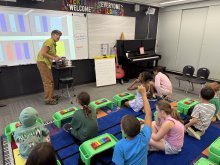
Park music teacher Amanda Maffei shepherds a fidgety group of second graders into focused attention on their glockenspiels as they practice “Zhao Peng You.” The song – the title translates to “Looking for a Friend”-- is part of a Mandarin children’s circle game the class has learned in their “Music in China” unit, a complement to the Grade 2 Global Studies exploration.
The lesson began with an introduction to the circle game, in which children perform a series of motions as they move around the room in two concentric circles. After watching other students perform the game in video, Amanda challenged her students first to explain how to play the game, teaching each other the moves, and then to play it together – all the while developing an appreciation for beat, rhythm, and tempo, essential elements of music theory.
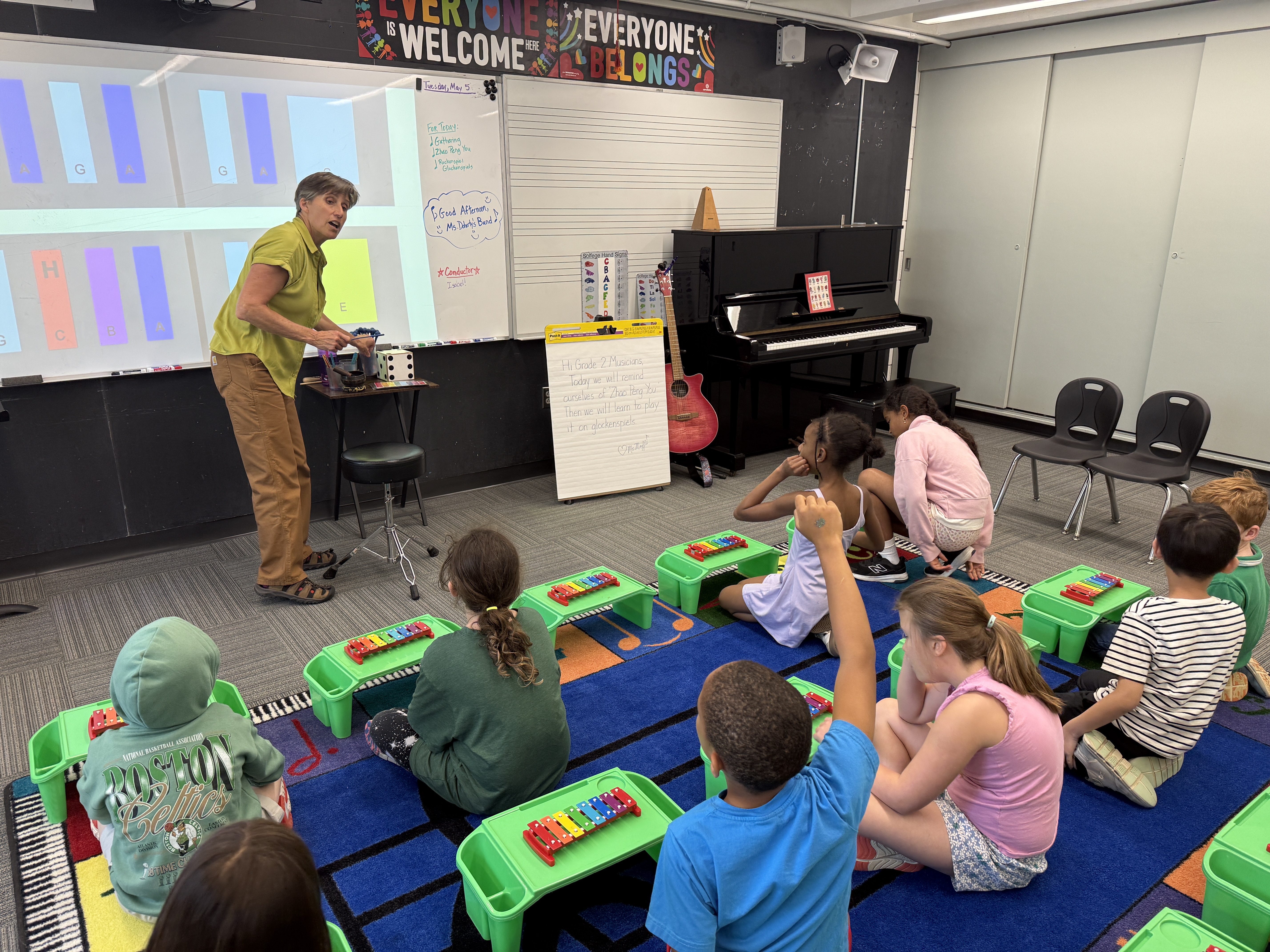
Having played the game, the students then set about learning to play the song themselves. Amanda projects each section of the song on the smartboard, graphically illustrated with color notations for each note that mirror the colors of the glockenspiel (with corresponding letter notations–A, B, C, D, E, F, G– for standard music notation recognition). Orange, green, yellow, orange, red, orange, red…the width of each rectangular color notation also denotes how long to hold each note.
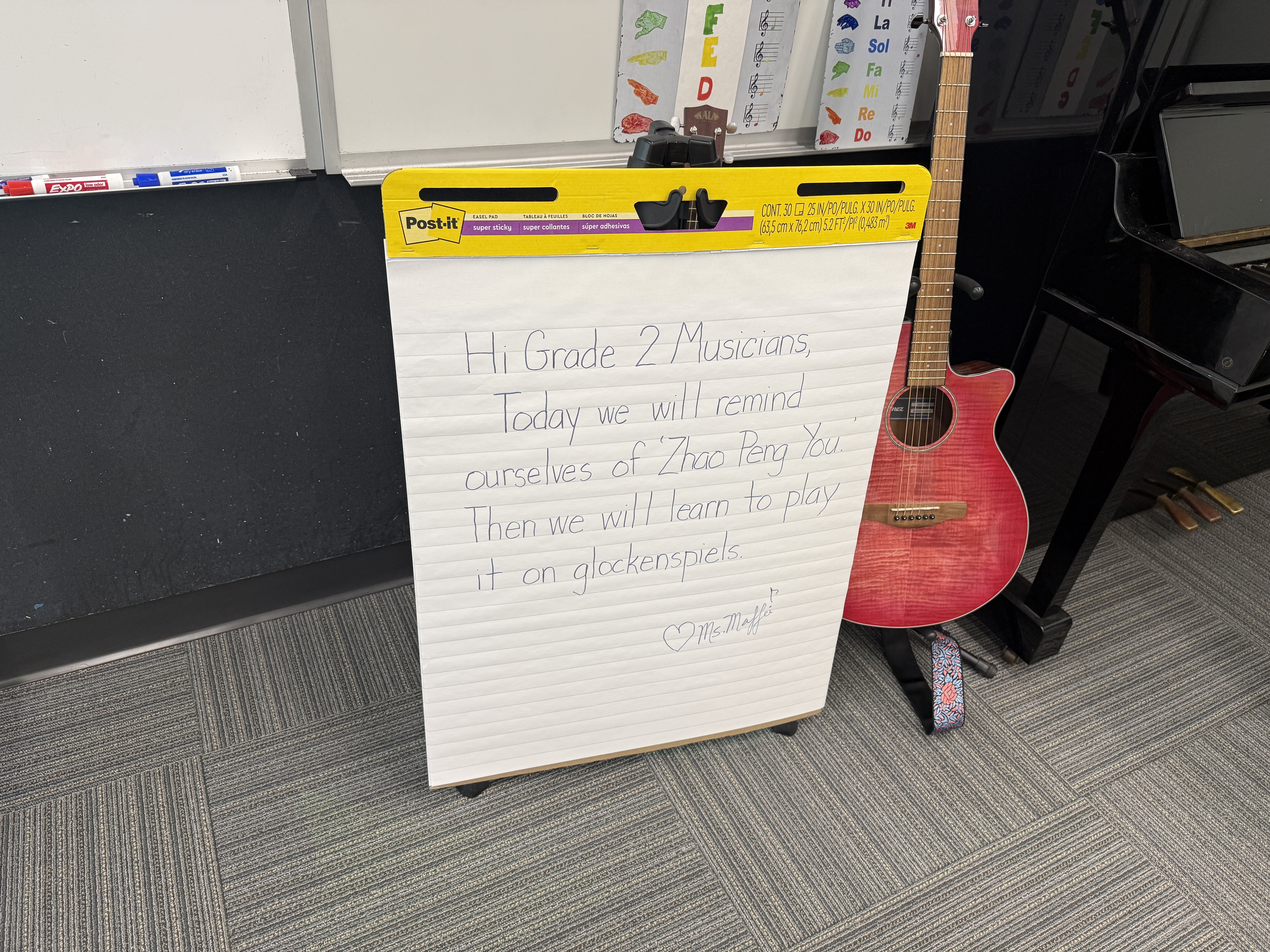
Once the students gain confidence with the notes, Amanda layers in a synthesized backing track, replete with electric guitar, drums, bass, and trumpet fills, to create the full “Rockenspiel Glockenspiel Orchestra” effect. And wow! It all comes together with joy and precision: they are musicians!
Each class begins with a “gathering,” an opportunity to settle in together to the reverberations of a singing bowl. Next, to the background of music connected with the day’s lesson, students do a series of Tai Chi type sequences to calm and center themselves as they connect breath and movement. A body warm up – tied to the rhythm of the song - draws them into music attention, followed by a related vocal warm up.
As the students engage with the music, they observe various musical elements, and apply concepts of music theory that soon become a familiar and natural language to them. Students become familiar with the language of music in a conversational way. They consider dynamics, intervals, pitch, rhythms, etc., becoming familiar with the ‘anatomy of the song’. Does the melody move by repeat, step, skip or leap? How many sections is the song divided into? What feelings does the music evoke?
“We talk about sound,” Amanda observes, “in a way that tunes them into what they are hearing, to what’s happening technically, and its effect.” She invites them to improvise on the piano, playing to evoke a chosen feeling, and then challenges the class to guess the intended feeling and explain why it felt that way. “A student might say, “Oh, well, that felt sad because they played it soft, low, and slow.” They get excited, realizing they know how music works.”
As Grade 2 teacher Peter Bown explains, Grade 2 students spend much of the year exploring countries and cultures from around the world. The music curriculum intentionally supports this, with “Music in China” being just one of several areas of study. Peter notes, “Amanda's work in music class is a wonderful extension of that study — when students learn a song rooted in a country we've been exploring together, it brings that culture to life in a way that goes beyond what we can do in the classroom alone. That kind of reinforcement, across two different subjects, is exactly what deepens understanding and makes learning stick.”
Depending on the year, on the countries covered in their classroom, and the number of available music classes (and the impact of snow days!) students may cover units dedicated to the United States, Mexico, China, India, Ghana/West Africa, and South Africa, spending six to eight lessons working with a song from each culture drawn from a tradition of children’s play. Each exploration opens up opportunities to get curious about many aspects of music. Listening to the sound of an instrument, they may think about what the instrument is made of. Does it sound like a wind instrument? Strings? What quality makes them say that? Then they see the instrument itself, and learn how it is constructed and played. They explore language, movement, musical styles, along with the games that children like them in different cultures enjoy, expanding their appreciation for the cultures they study in the classroom.
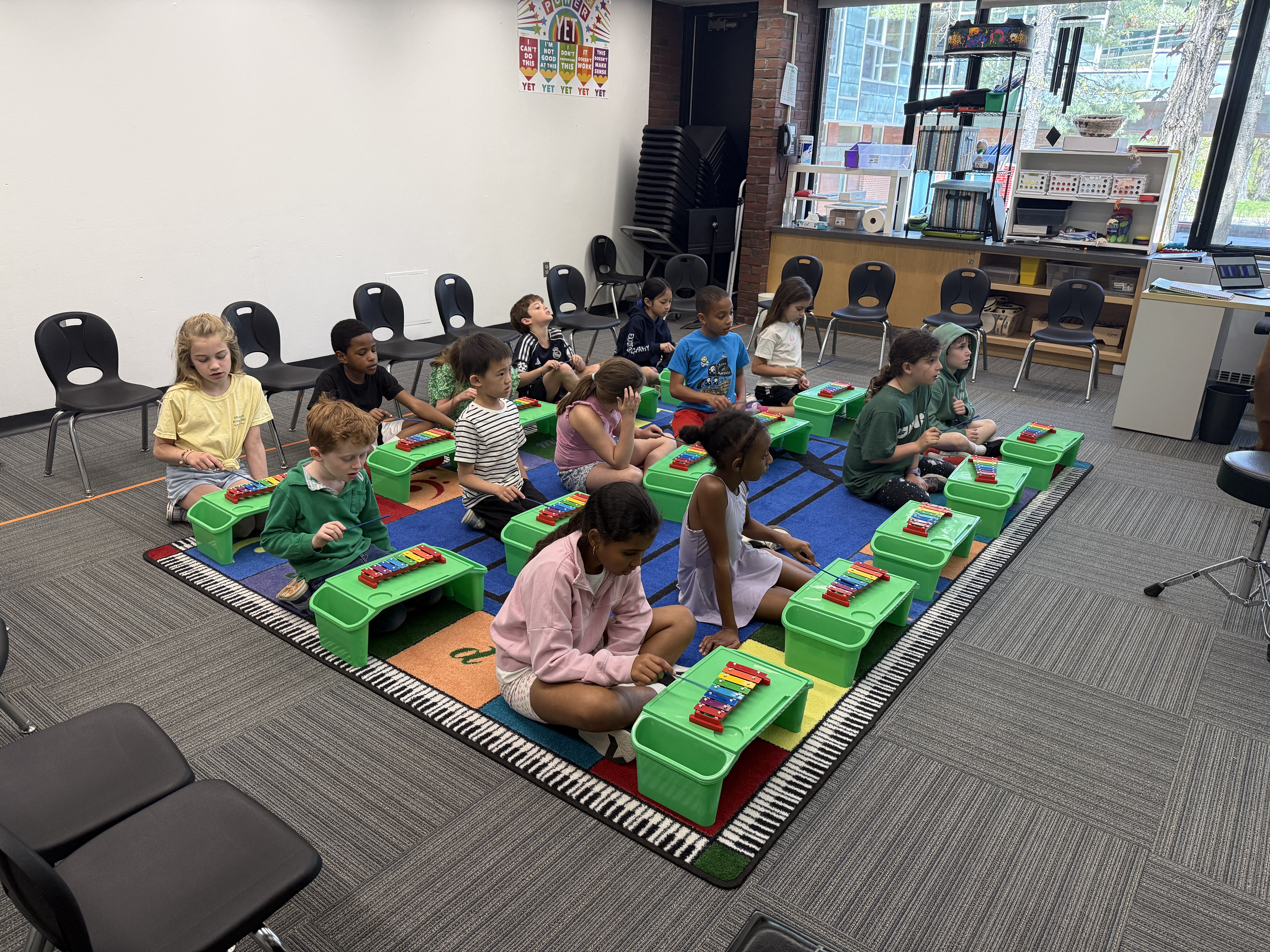
Along with the growing appreciation of the variety of music that is available to them, students grow in confidence that they can participate in this music, coming to understand themselves as musicians. As they gain understanding of the parts and pieces of music, it becomes a vernacular they can use. They know the parts and pieces, and they know they can put the pieces together on their own, just as they might put pieces together to create visual art, a math problem, a story, or a game.
Music is no longer some specialized form that requires special access. “My students come to me and say ‘I wrote a song at home!’” Amanda says. They have the tools to put sounds together in ways that are both meaningful and fun. I hope they leave my classroom knowing, ‘I can do this.’”
“I want our Park students to feel like they can express themselves musically and can play and create their own music at home. As in storytelling, the oral came well before the written. In my book, the written is important to our musical world, but it takes a second seat to the global understanding and experiencing of the music inside ourselves that loves to come out and play.”
By Suzy Akin, Director of Strategic Marketing and Communications
#TheParkSchoolMA #ParkSchoolExcellence #ItAllStartsatPark #ParkSchoolCommunity


_11zon.jpg&command_2=resize&height_2=85 "Small Ideas that Build Something Special")