.jpg?command_1=resize&width_1=860&height_1=860)
Head’s Lines: Finding Joy in Challenge
Naturalist and “Father of the National Parks” John Muir wrote, “In every walk with Nature one receives far more than he seeks.” Writer Brene Brown considers the wilderness “an untamed, unpredictable place of solitude and searching” and “the place of true belonging.” And right here in New England, Concord neighbor Henry David Thoreau went “into the woods” because he “wished to live deliberately, to front only the essential facts of life, and see if [he] could not learn what it had to teach.”
As an educator, I believe the benefits of outdoor education expand our students’ lifelong learning in significant, personal ways. Outdoor learning and discovery have been important to me my whole life, in simple and sincere ways, and I hope they can be a part of the lives of Park students as well.
When I was growing up in North Kingstown, Rhode Island, it was just understood that if you weren’t eating or sleeping or going to school, you were expected to be outside. I spent a great deal of time in the woods near my house, weaving through a carpet of ferns to climb a big rock wall to the huge oak tree with the swing. There was a big blue rock across from our house, and my friends and I would climb up and smash stones into dust, imagining what the powder might be, and passing the time in silence or conversation. Beyond the big blue rock, there was a creek where we’d catch frogs and look for garter snakes. The forest was our backyard, our front yard, our playground, and the inspiration for countless adventures. It was a time of independence, exploration, negotiation, decision-making, and a healthy amount of mischief.
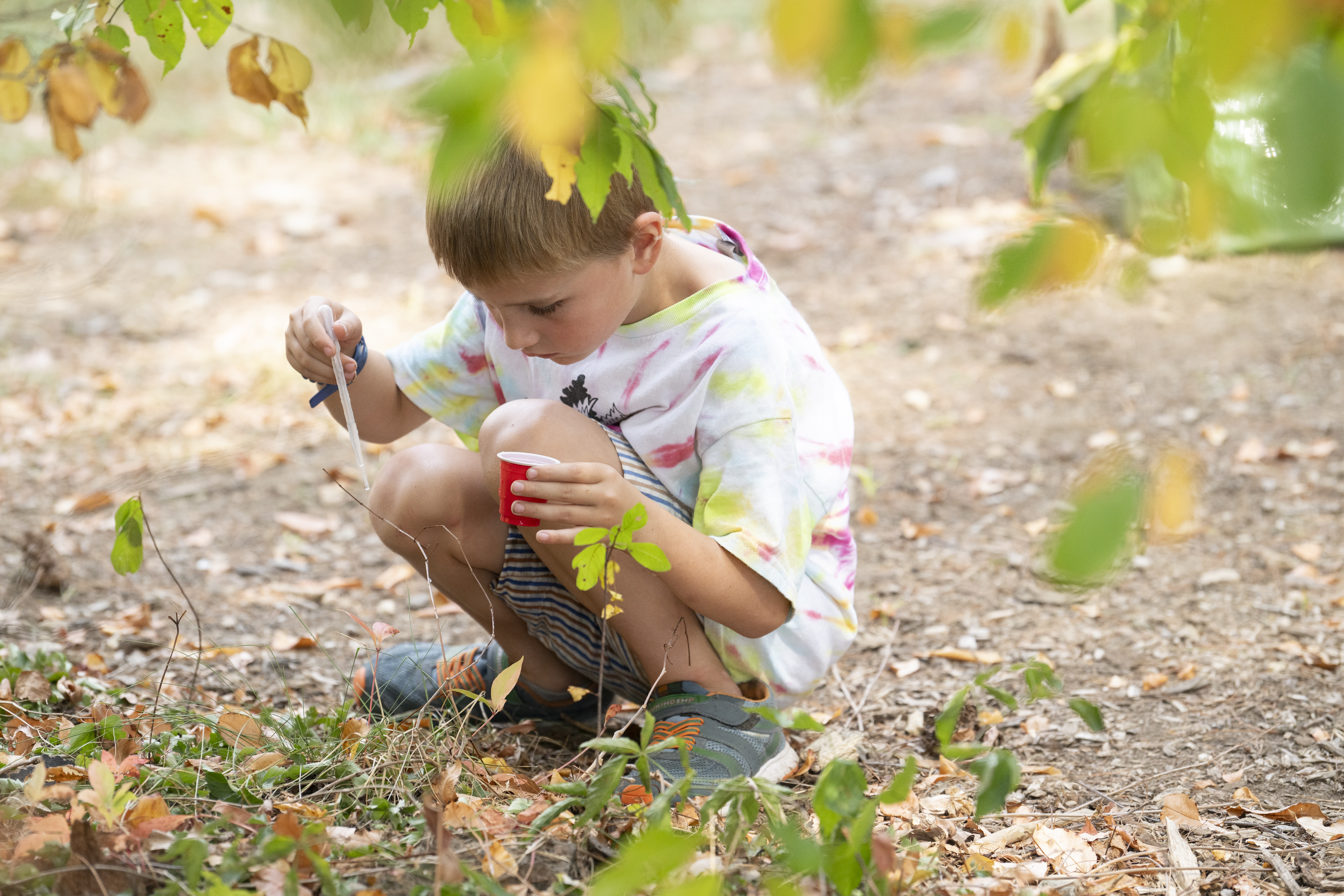
In Grade 5, science comes alive outside through ecosystem scavenger hunts, a visit to Great Meadows National Wildlife Refuge to meet Blanding’s turtles, and hands-on investigations of the school pond that connect students to the story of the Charles River. The adventure continues at Hale Reservation, where students return twice—once for fall team-building and again in the spring for the whole grade’s first overnight, complete with yurts, s’mores, and plenty of laughter. These experiences build the wonder, friendship, and confidence that carry fifth graders into the bigger journeys ahead in Upper Division.
MEGAN ARMOUR UPPER DIVISION SCIENCE TEACHER
In my early teens, my family traded our natural setting in North Kingstown for a home in Providence, and at the same time, I got into mountain biking, allowing me to stay connected to nature and explore the woods more extensively. This led to an appreciation of hiking and trail running, and a desire to climb the Green and White Mountains of New England. After college, I completed a four-week National Outdoor Leadership School (NOLS) backpacking course in Talkeetna, Alaska, earning my Wilderness First Aid (CFA) certification. In 2011, Katie and I moved from Washington, DC to Marin County, California, and my love for and time in nature exploded as we found ourselves in one of the most beautifully preserved corners of the world. During my time at Marin Academy, I had the opportunity to lead outdoor trips for students across California and to earn a Wilderness First Responder (WFR) certification, which I maintain.
Whenever I have free time, I seek outdoor activity. This is what fills my bucket. It provides an unmatched opportunity for personal reflection, a time for connection with nature, and with others who share my appreciation. I value the chance to surround myself with silence, appreciate the beauty of the landscape, and enjoy and respect the creatures that live there. I love being able to get to places few others get to witness, by myself or with companions.
Some of my favorite trips have included hiking the Presidential Range, staying at huts along the way, and spending time in the Alaska wilderness, supported by bush plane. We walked trails, hiked across fields of snow, navigated tundra, and scrambled through boulder fields, camping by glacial lakes and raging creeks along the way. At other times, I’ve enjoyed winter camping in the White and Green Mountains. It feels pretty extreme, a real physical test of endurance and comfort, and the only other folks out there are those who really want to be there.
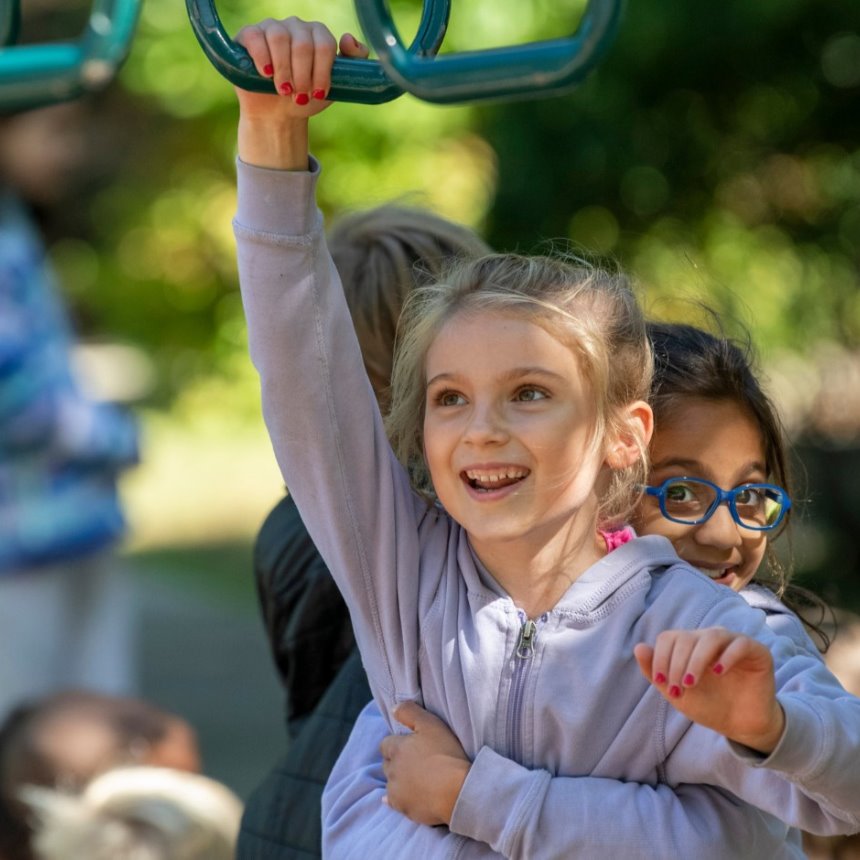
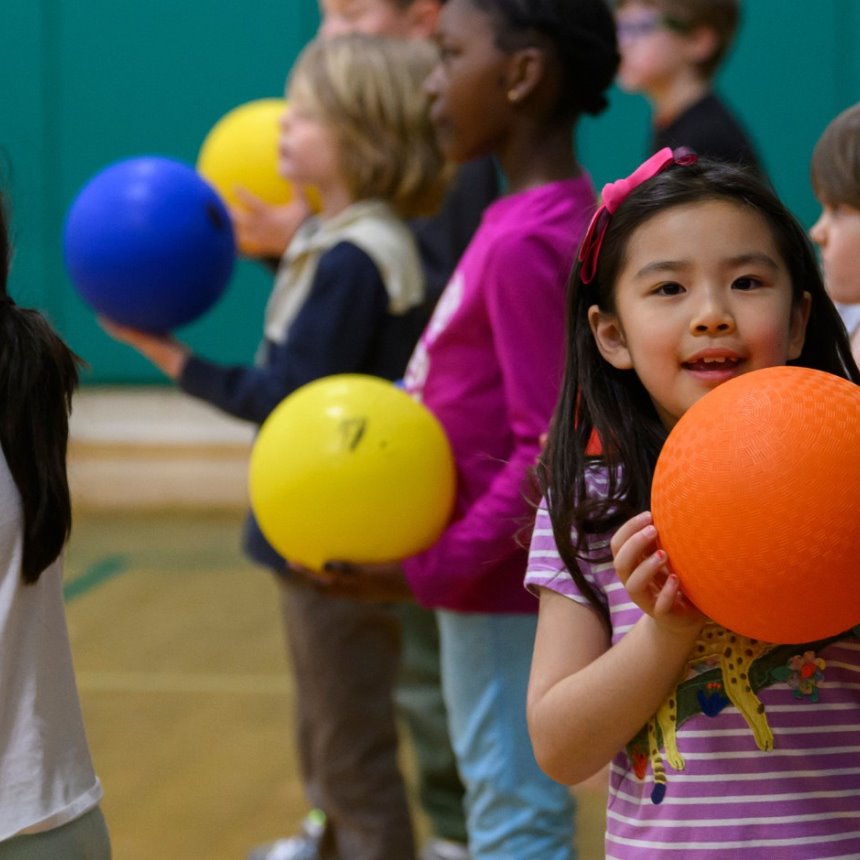
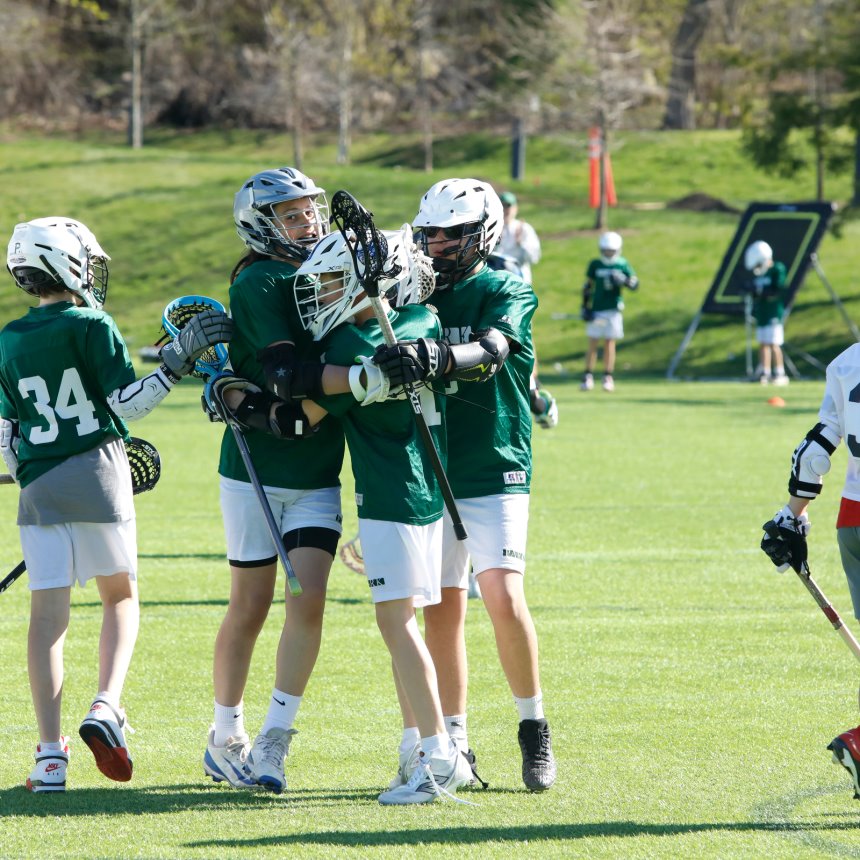
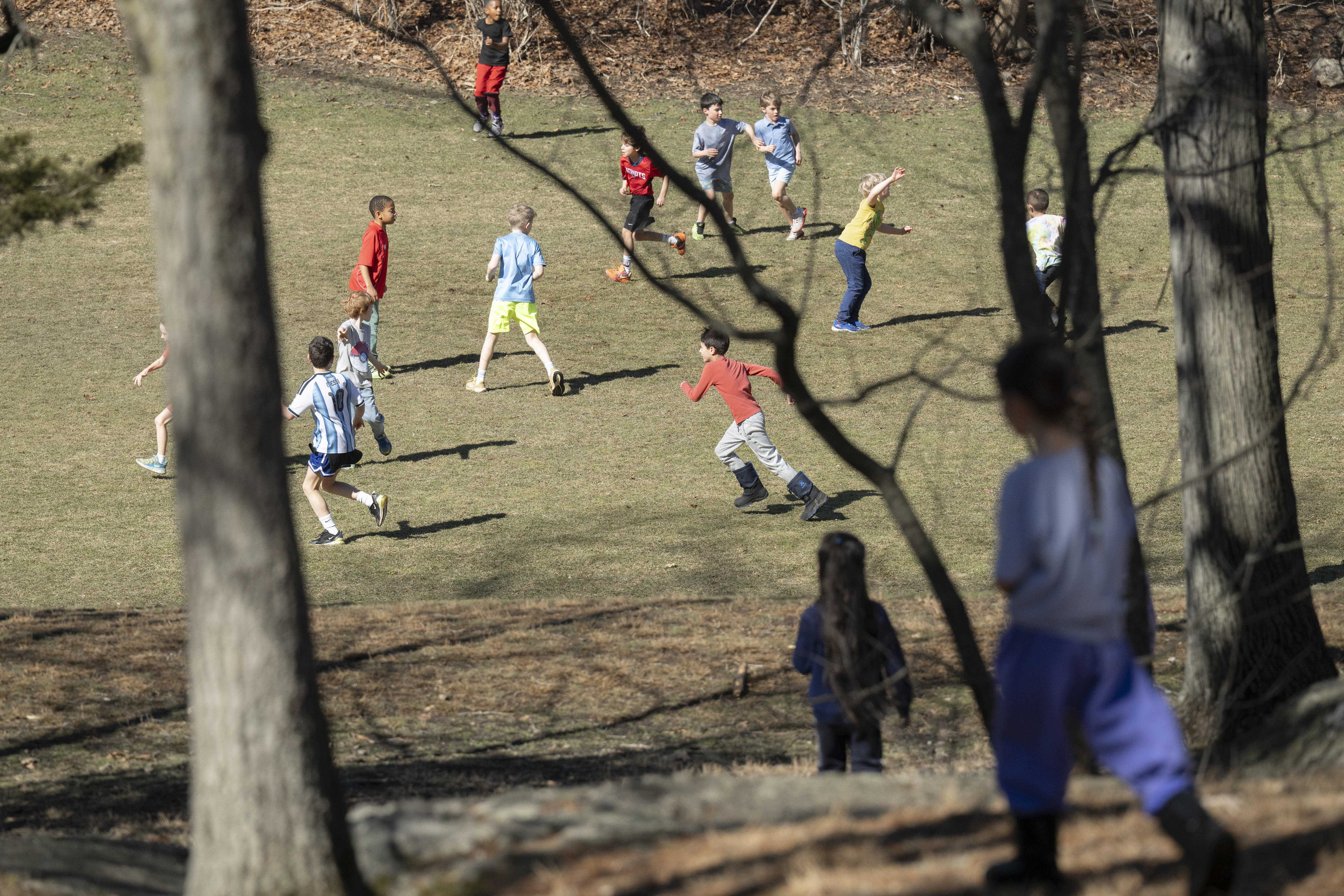
The turf field has been a game changer, allowing us to spend more time outside across seasons and creating space for multiple classes—and even different age groups—to learn and play side by side. With additions like the high ropes course and regular opportunities to explore beyond the field, students experience outdoor play as both joyful and challenging, from structured games to moments of connection across divisions. Students leave Park with a genuine love of being active outdoors.
KARA FONSECA PHYSICAL EDUCATION TEACHER
While I still aspire to hike the Canadian Rockies and mountain ranges of Europe, I also value the opportunities closer to home. I want to introduce my children to the Appalachian Mountain Club (AMC) cabins and huts across New England. I love the way these cabins bring people together, cooking and gathering in the communal kitchen and dining room, nestled in the wilderness. And, I love simple walks in the woods with Katie, Peter, Caroline, and Bear around our house in Vermont. In sharing this with my family, I hope they will be as excited about the woods and nature as I’ve always been.
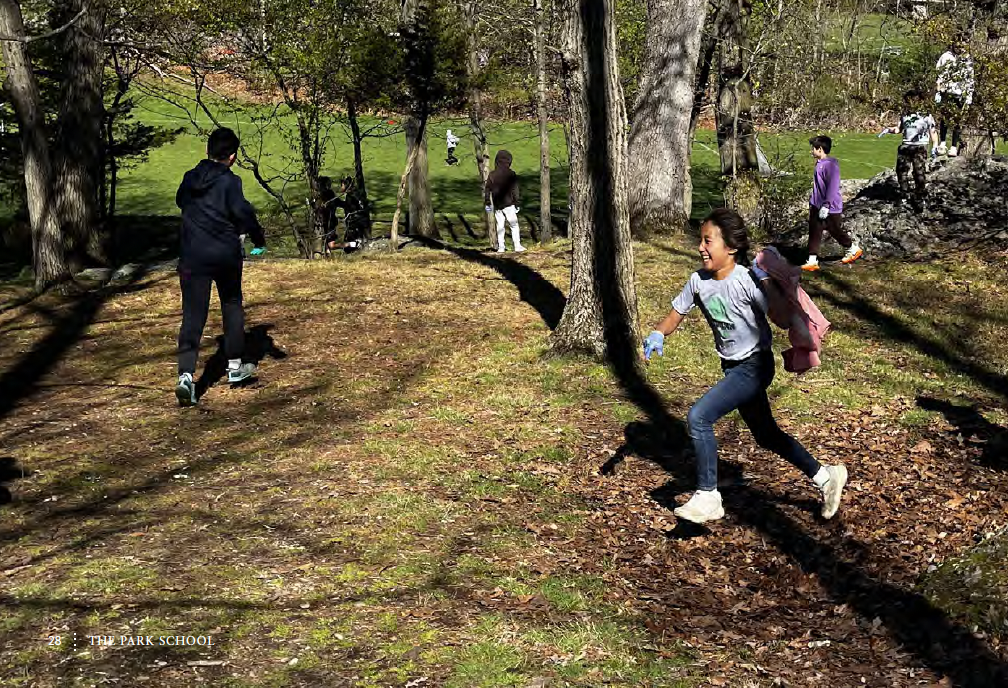
With Park’s acres of unspoiled forest, we have the opportunity to introduce students to the woods, to nature, and to the experience of creative play, imagination, reflection, and connection that the forest affords. While we can’t exactly offer a multi-week backpacking trip, we can nurture a love of and connection to nature and introduce students to what it means to enjoy the outdoors. The qualities of “expedition behavior” I learned at NOLS are transferable to our context as well. An expedition is successful when humans bring their best attributes to bear to ensure effective communication, collaboration, leadership, and safety.
The act of stepping into nature is an act of curiosity, and being in nature presents challenges. In all the ways articulated in the Park Portrait, our students welcome a journey of lifelong learning, and outdoor education expands this beyond the classroom in very personal and lasting ways.
Not long ago, in the early evening when I had gone home for the day, I looked out my window and saw Park’s ASP students playing in the woods. Four kids were working together to build a fort. Compassionate collaborators, they valued others’ voices to achieve a common goal. They sought multiple perspectives and partnered kindly. They listened thoughtfully, raised questions, and learned from mistakes. They were learning joyfully. That, right there, is the best of education.
By Scott Young, Head of School
#TheParkSchoolMA #ParkSchoolExcellence #ItAllStartsatPark #ParkSchoolCommunity


_11zon.jpg&command_2=resize&height_2=85 "Small Ideas that Build Something Special")