.jpg?command_1=resize&width_1=860&height_1=860)

Head’s Lines: Finding Joy in Challenge
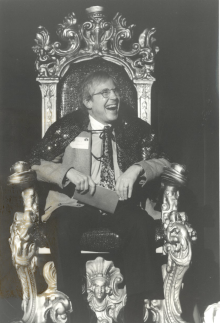
As headmaster from 1969 through 1993, he oversaw the creation and move to the 171 Goddard Avenue campus, and steered broad changes in curriculum and practice across every area of school life. However, for all the tangible accomplishments of The Hurlbut Era, what stands out in the memories and tributes shared is the strong sense of community and joy he nurtured that still defines the School today.
Being head of school is a complex role that asks a single human being to be part educator, part strategist, part cheerleader, and part entrepreneur. The sum of accomplishments—the legacy—comes to define what the School stands for. In so many ways, Bob Hurlbut’s legacy has forever shaped what makes Park “Park.”
Bob grew up in Cambridge, graduated from Harvard, served in the U.S. Navy, and later taught history at Newton High School. At just 32, he became headmaster of The Park School. His wife, Nancy, who died in 2024, was as much a part of Park as he was, serving for many years as the School’s librarian, and their children—daughter Angie, Class of 1976, and sons Rob ’79 and Sam ’81—grew up at the heart of the Park community.
Bob was just 34 when Park moved to its new home on Goddard Avenue and, as Jay Howland wrote in the Centennial history of The Park School, his early years “certainly demanded youthful vigor.” In the September 1971 edition of The Park Parent (precursor to Park Perspectives), Bob wrote, “Park is an idea, a philosophy or goal, a belief in growth.” He stressed that “there must be no lessening of the courage, curiosity, and willingness to articulate and learn. We will continue to grow, to self-renew, but only if we keep moving.”
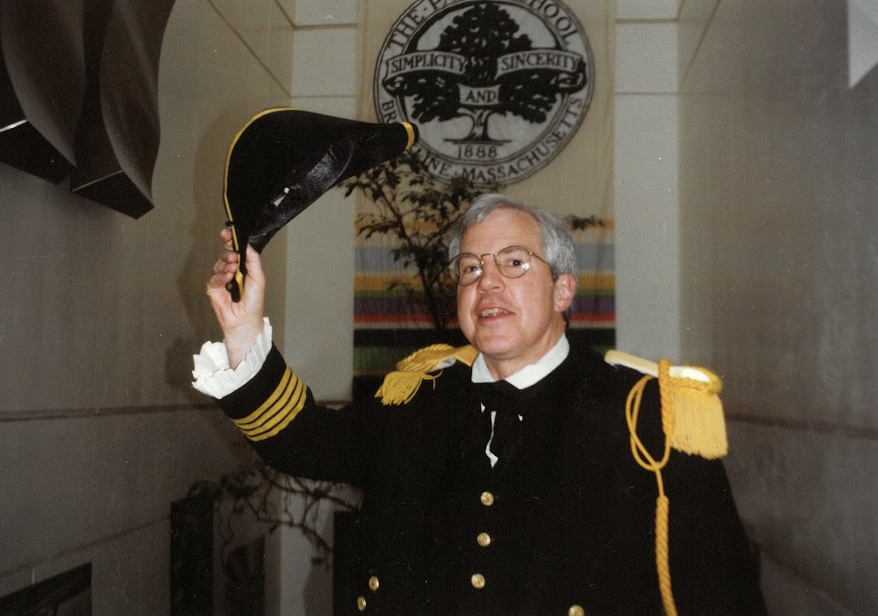
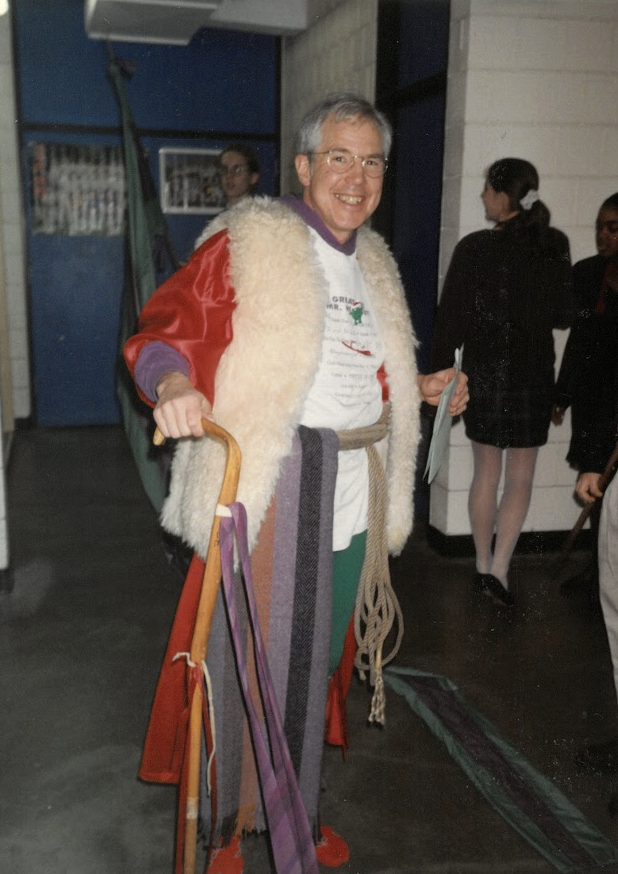
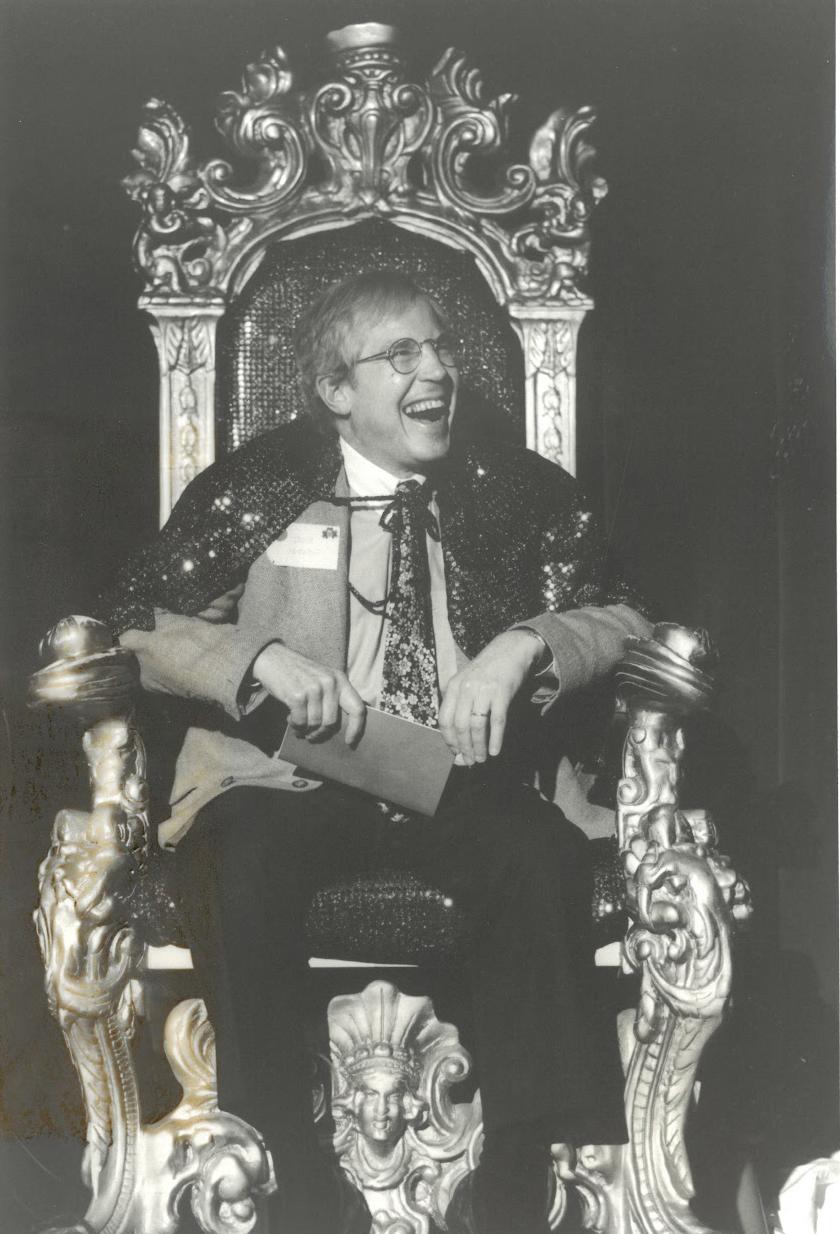
And keep moving, he did. Bob led ongoing work to evaluate, develop, and renew curriculum while also responding to the cultural demand for a broad rethinking of elements of school life previously taken for granted. He led a deep focus on academic excellence throughout the school and disbanded the dress code. He addressed the historic pay differential between male and female teachers, as well as Upper and Lower Division teachers, and today, Park sustains faculty salaries at the top of its peer group. Park launched new programs, including the Grade 7 Project REASON (Resource and Environmental Awareness through the Study of Nature) program, learning that continues today through the Grade 6 Merrowvista experience. He expanded the arts, helping create traditions like Yule Festival, where he famously performed as the “Lord of the Dance.” In his final year, Park launched its first student trip to Spain, starting what is now the International Travel Program.
As the Centennial history notes, “One of Bob Hurlbut’s foremost desires when he came to Park [...] was to promote a climate for teaching that would attract and reward extraordinary teachers. ‘Children learn best from passionate teachers, the kind of people who wear their hearts on their sleeves,’ he says. [...] Mr. Hurlbut wanted to make Park a school that would both challenge and support; he wanted teachers to feel they were operating in a community with shared goals and mutual respect.” This, too, fueled the spirit of community, inviting educators who would share Bob’s boundless enthusiasm and energy.
Jerry Katz, who succeeded Bob as Head of School from 1993 to 2013, observed that “Bob transformed Park from a ‘neighborhood school’ to an inclusive, metropolitan independent school, fundamentally shaping the identity and mission Park has today.” Along with broadening Park’s admission outreach, Bob redefined some of Park’s older traditions, replacing outdated practices like “Father’s Day,” for example, with broader family involvement and volunteerism through the Parents’ Association, and introduced events like Grandparents’ Day. He believed strongly in partnerships between parents, teachers, and students—something that remains central to Park today.
Park history teacher David Perry was hired by Bob in 1987, and he credits Bob with leading the beginnings of Park’s deep commitment to diversity, equity, inclusion, and belonging. “It was Bob who prioritized multiculturalism and began the journey that led us to holding DEIB as one of Park’s core values.” In addition, David says, “Bob always led, first and foremost, with joy,” and that made Park a really special place. Bob’s encouragement—even insistence—that teachers model an authentic love of learning and teaching, Dave believes, directly connects with “the ‘joyful learner’ part of The Park Portrait’” and “is inspired by Bob’s spirit, energy, and love of education and Park.”
Polly Hoppin, Class of 1974, shares insight into Bob’s leadership style as “a good listener, a keen observer, and a leader whose deep commitment to and appreciation of his colleagues and the broader community of the school—parents and students—were front and center every day.” Polly’s mother, Caroline Hopper, was among the professionals whose career Bob nurtured, she observes, as he “nudged her to get back into her chosen profession [after time off with young children] as admission director, then supported her as she made bold (for then) moves to diversify the school, both racially and in terms of a range of family configurations, in particular gay and lesbian couples.”
In addition to his strategic and operational leadership, Bob was gifted at making people feel good. For Polly Hoppin, “a through-line for me about Bob was showing up. At every Yule Fest post-retirement. At the February Fête. At reunions. At sports games. He let everyone who had been a student or family connected to him know that he still cared. And at the same time made room for new leadership. His showing up was not about hovering and getting in the way; it was about celebration of all that Park and Parkies were becoming after he retired, and his sheer delight at being able to participate.”
Joy Bartlett, who retires this year after supporting her fifth Park Head of School as Executive Assistant, came to know Bob first as the parent of two Park students before being hired as the school’s secretary. What she remembers best about Bob was the thoughtful appreciation he brought to everyone around him. When employee contracts came out each year, every one contained a personal note from Bob acknowledging personal or professional landmarks or accomplishments—a marriage, the loss of a loved one, a service provided that made Park better. He made birthday bookmarks for every student. “He was strict with the rules,” she recalls, “but always a barrel of fun. He made you laugh, greeted everyone with a smile, and always had something positive to say.”
Former trustee Dozier Gardner, who served as Board Chair during Bob’s tenure, remembers him as “a loveable soul.” Thinking back to those years, he says, “Bob was such a welcoming person, an inviting presence for the kids, their parents, and the faculty.”
David Ball, Class of 1985, says that “Mr. Hurlbut’s unabashed joy infused—defined—my years at Park. His bold, bright ties brought light on the dreariest of days. His exhortations in Morning Meeting, filled with wisdom I could not then appreciate, launched our days. His genuine delight with the riddles we asked him as nine-year olds made us laugh even harder. And, of course, his booming voice at the Yule Festival ushered in the most magical moment of the year.”
These memories are emblematic of the wonder, curiosity, laughter and joy that, thanks to Bob Hurlbut, filled each day. “Learning and laughter, school and joy—they were more than partners,” David recalls, “beautifully and seamlessly intertwined,” as were their headmaster’s “faith in us and care for us.” David recalls the trepidation he felt on the way to a birthday celebration in the headmaster’s office, preparing for the necessary handshake. “Firm grip, I told myself, look him square in the eye.” Yet when David’s turn came, “there was Mr. Hurlbut, greeting me with the biggest smile on his face, the brightest glint in his eye, the firmest handshake. I don’t recall what he said, but I know how I felt: on that day, and every day, Mr. Hurlbut believed in me.” David, a career educator, has carried that faith forward.
David’s brother, Rob ’83, agrees that Bob Hurlbut “set the tone for the school,” personifying the Park’s values of “curiosity, constant learning, engagement, personal risk-taking (singing in tights in front of 500 people?!), accountability, respect for one another, joy, and warmth.” However, he recalls, “it was in the personal, one-on-one settings that he shone just as brightly.” Rob vividly remembers when he was stuck in a cast with a broken leg in second grade, “Mr. Hurlbut came up to the 4th floor and carried me down four flights of stairs—making me feel incredibly special in the process—I remember it 50 years later! It was obvious he cared about everyone at the school.”
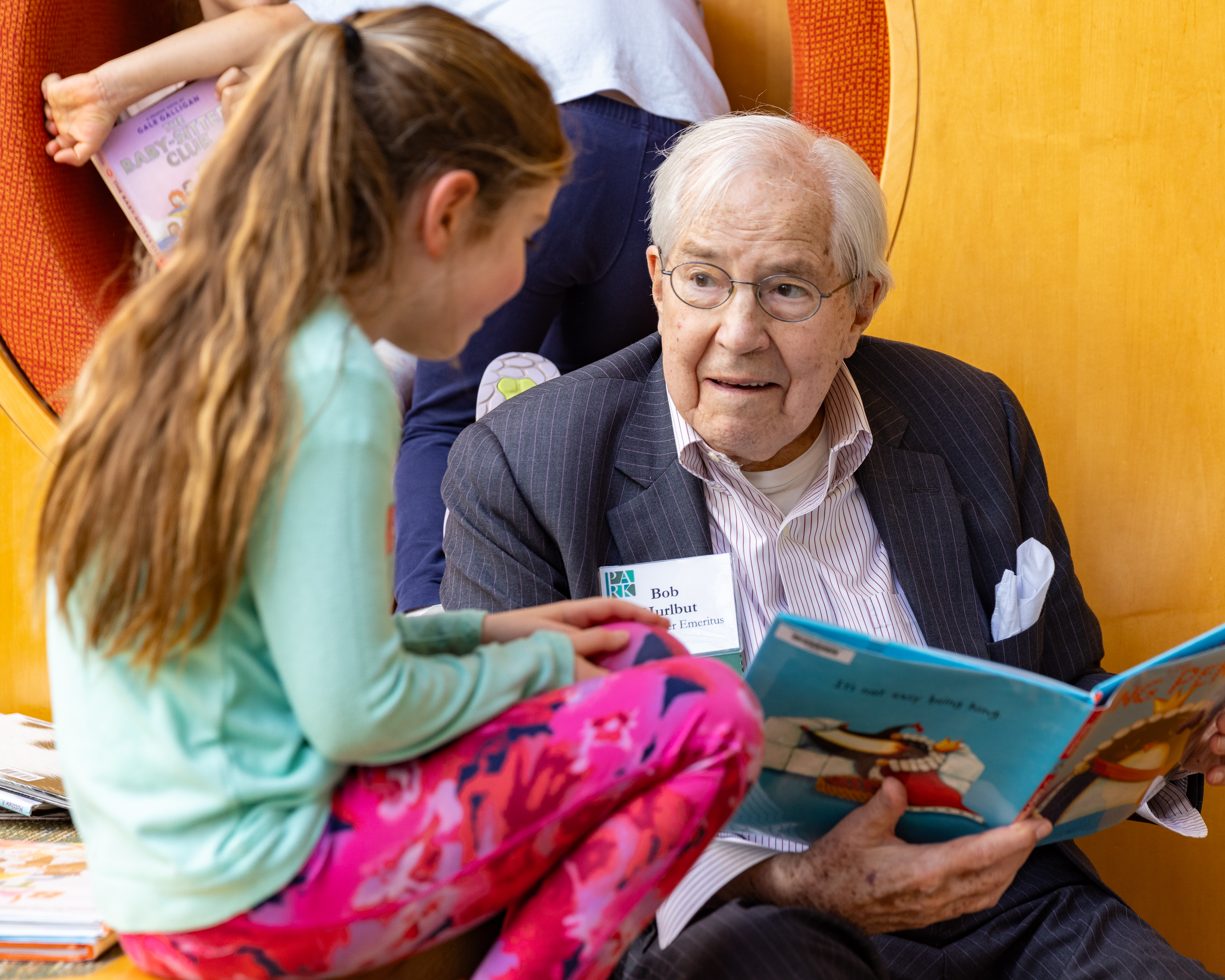
Rob also highlights the care Bob bestowed on their mother, Betsy Ball, who served for years as Park’s receptionist. “He cared about my mother, both as a parent and then for many years as a colleague,” he recalls. “The bond they formed was a special one—built on mutual respect, a common belief in treating people with kindness and sincerity, and above all a deep belief in the potential that exists within every child and genuine delight in witnessing and supporting every child’s development and growth.”
Bob remained committed to a vision of what he believed truly set Park apart. In the competitive school landscape, he knew that private schools needed a clear articulation of the program and its differences, with “the humanity of this endeavor” being a key differentiator. “The humanity of Park is a quality upon which this school’s very survival may depend,”he wrote. “The school’s concern for the individual both as a unique human being and a member of a family and community. [...] This school is joy, spontaneity, love, and fellowship.”
As Park’s Centennial history reflected, Bob’s “endlessly rejuvenated enthusiasm for anything and everything to do with the Park School is easy to take for granted, but it is a precious gift,” and that enthusiasm extended beyond his retirement. He remained widely known, and much beloved, across generations of the Park community, attending important events and keeping up on Park news.
Jerry Katz shares that “Bob was incredibly gracious and supportive throughout my 20 years at Park.” Bob also met every spring with Head of School Scott Young, and they discussed what’s going on at Park and in the world, and made connections between the challenges and opportunities of their respective tenures. Scott reflects, “He has always provided an empathetic ear and wise counsel to me, and has been a model of what it means to remain forever committed to Park.”
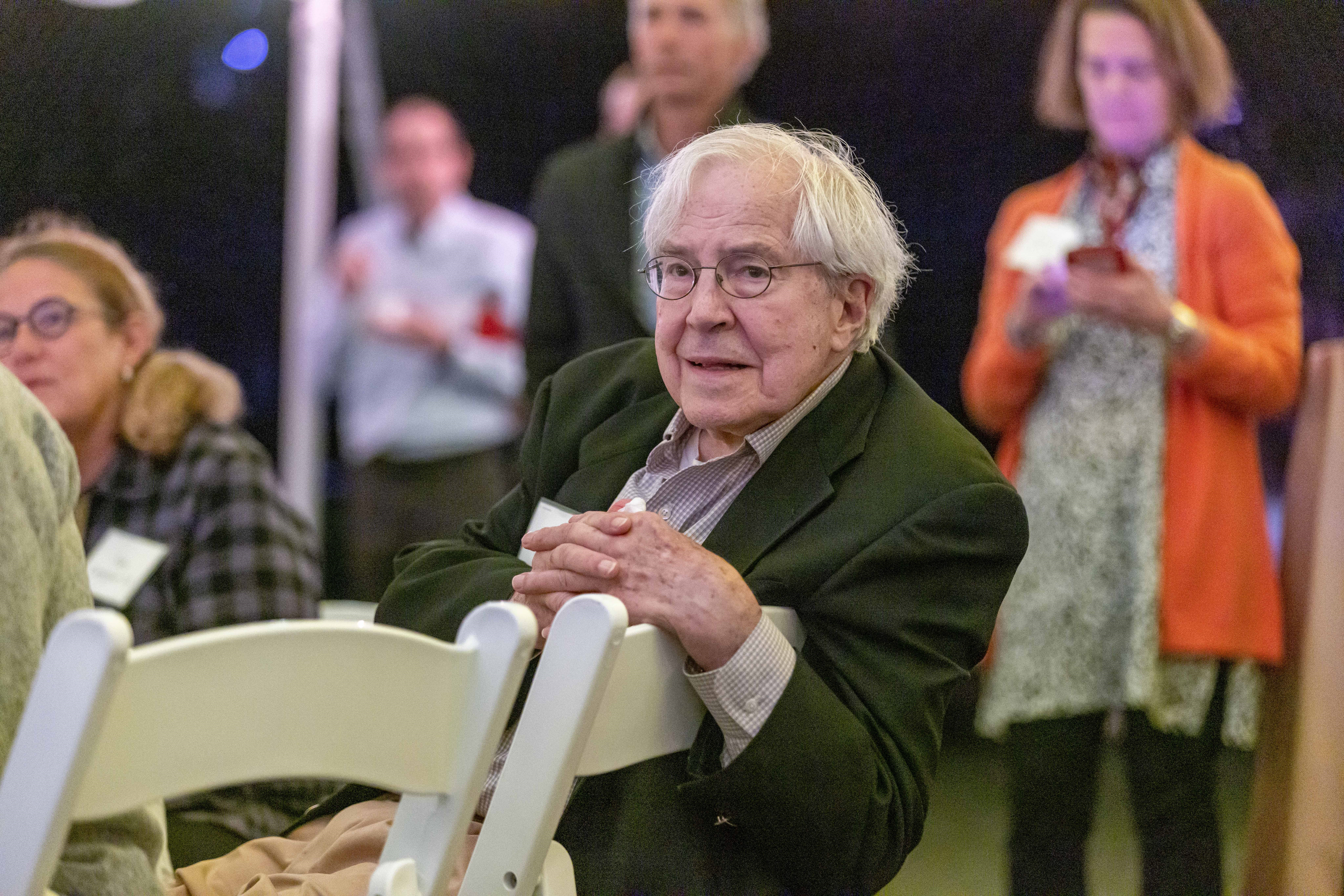
After leaving Park, Bob served as Executive Director of the Cambridge Community Foundation (CCF), which supplies funding to dozens of Cambridge-based youth initiatives. He also co-founded the Cambridge Senior Volunteer Clearinghouse, where he was an active volunteer.
Above all, Bob was committed to his family. Our community joins Angie, Rob, and Sam in celebrating his life and legacy. Bob was, truly, one of a kind.
By Suzy Akin, Director of Strategic Marketing & Communications
#TheParkSchoolMA #ParkSchoolExcellence #ItAllStartsatPark #ParkSchoolCommunity
This article first appeared in the Spring 2026 Bulletin.


_11zon.jpg&command_2=resize&height_2=85 "Small Ideas that Build Something Special")