.jpg?command_1=resize&width_1=860&height_1=860)
Head’s Lines: Finding Joy in Challenge
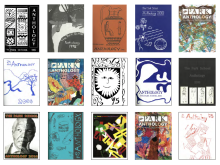
But Park’s Anthology has never quite done that. Instead, it has remained something alive—shaped each year by new students, new ideas, and a shared belief that student voices, in all their forms, are worth celebrating.
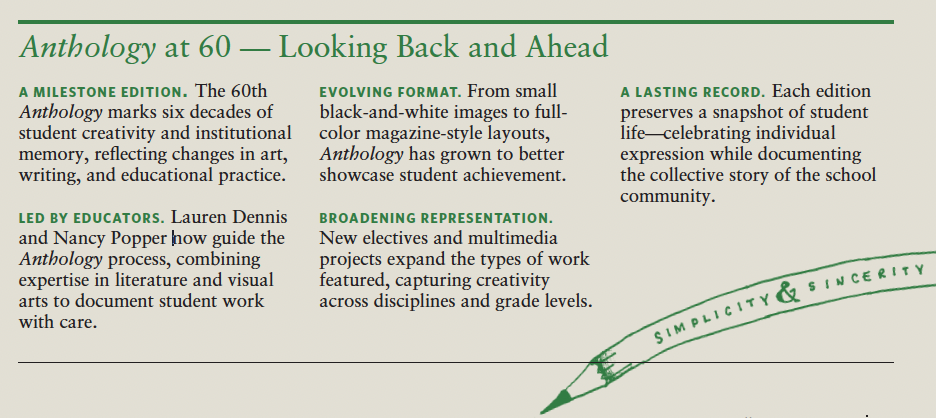
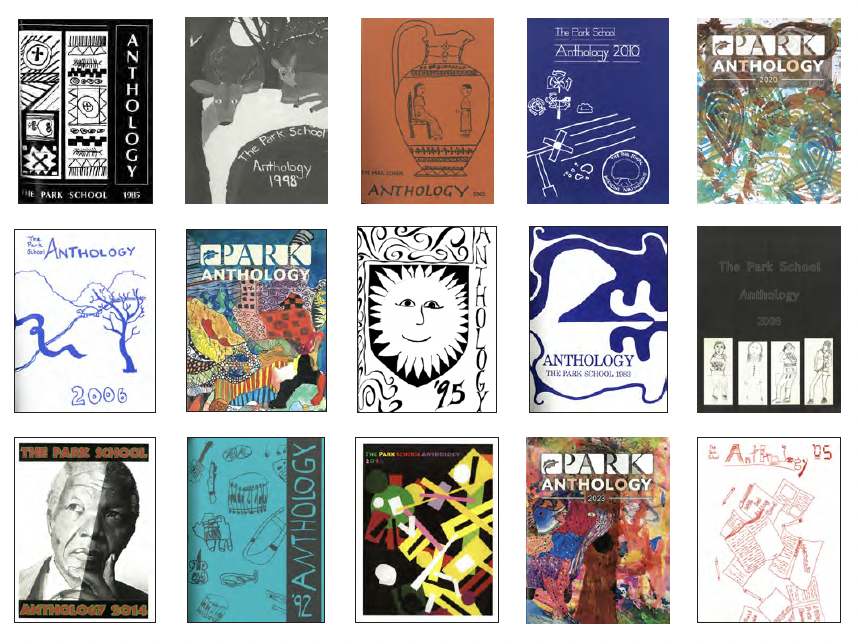
Anthology is The Park School’s annual collection of student art and writing, first published in 1966 under founding editor Jonathan Shaw with a mandate to pursue “diversity and excellence.” What began as a modest, black-and-white volume has grown into a full-color, magazine-style publication that functions, as Nancy Popper puts it, as “our Park Portrait”—a yearly record of the creativity, intellectual range, and individual voices that define the school community.
Nancy, an art teacher and department head who oversees the visual side of the publication, inherited the role after a series of transitions that mirror Anthology’s own evolution. Lauren Dennis, an English teacher and department head who joined the editorial team around 2020, came to the role as a longtime admirer. As a teacher in the humanities hallway, she had watched students light up when the publication arrived each year. “I knew about it as a fan,” she says. Together, Nancy and Lauren have worked to expand the Anthology—not just in size and design, but in its understanding of what student excellence looks like.
"Many whose writings and drawings will appear here will be surprised to see themselves in print. Still others who have nothing in this anthology will be disappointed. Only a part of what I received could be included, and I regret I had to exclude so much. To select short stories, poems, and drawings for an anthology spanning writers who range from ages three to fifteen is not easy. By the selections which appear here, I have tried to reach for both diversity and excellence."
This founding statement from John Shaw, Anthology’s first editor, has appeared in every Anthology edition since 1966 and still resonates with the editors today.
Nancy and Lauren are the latest in a long line of faculty who have carried the publication forward. Since 1966, it has passed through the hands of teachers across disciplines. One of those early collaborators recalls that Anthology began as a deeply hands-on experiment in bringing student work together across disciplines. In the late 1960s and early 1970s, art teacher Annie (Aleskovsky) Zeybekoglu worked alongside English teacher Nancy Sawaya to launch the publication. “We wanted this amazing student work circulated so people could see it,” she remembers. Artwork was photographed, writing was typed by hand, and the final booklet was xeroxed and bound in-house. Selections were intentionally paired: visual work alongside writing that echoed or responded to it. “We tried to find correspondence between those two kinds of creative expression,” she says. “A landscape and a poem about walking on the beach.”
At the time, she recalls, the goal was more about conversation—helping students see how the same idea could be expressed in different ways. “It was empowering,” she says. “It gave people permission to draw differently than someone else, or to be fascinated by a different aspect of something.”
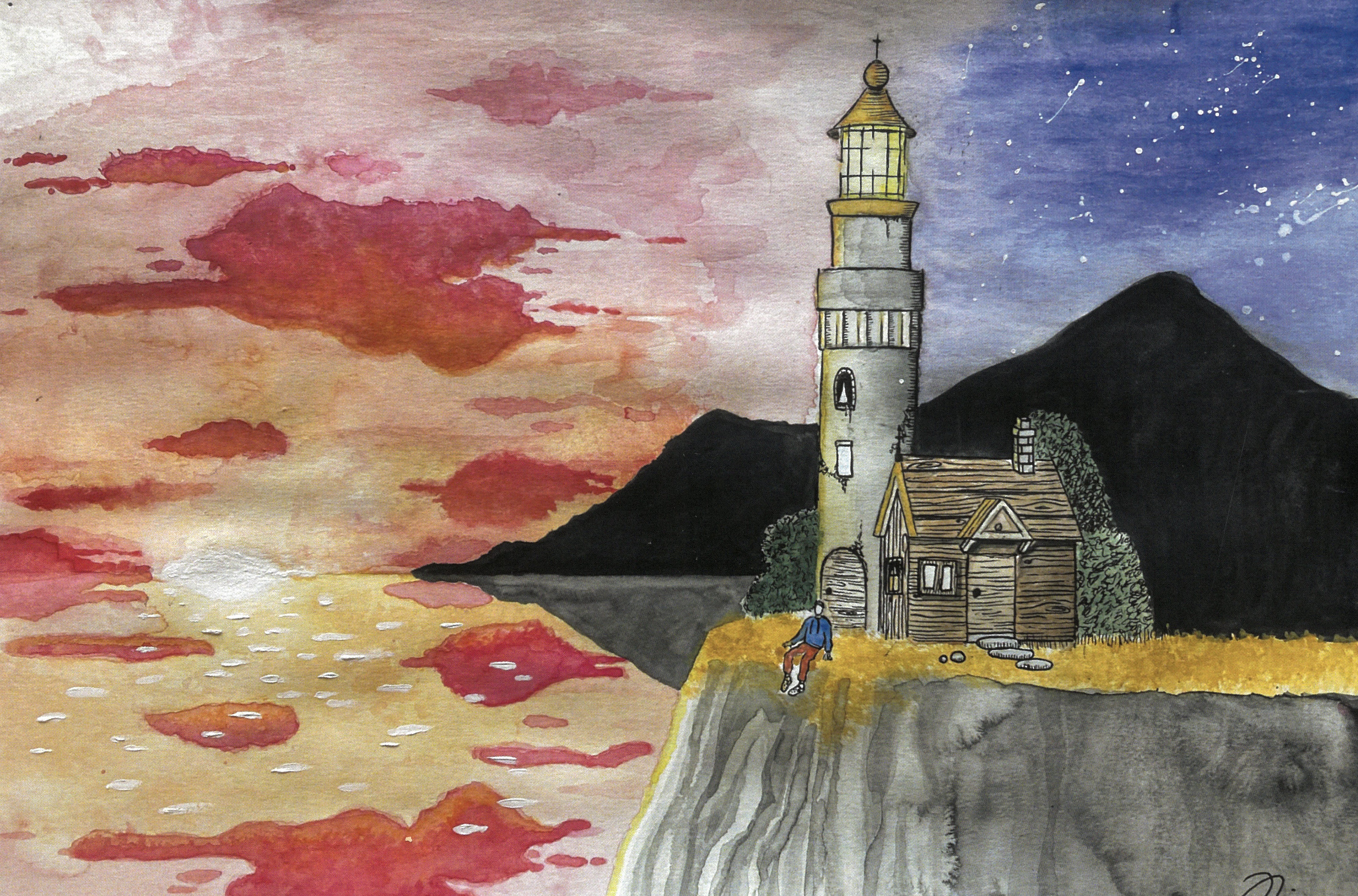
Untitled, 2024, Ollie J. '24, Grade 8
One of the most significant shifts in recent years has been the broadening of what qualifies as Anthology-worthy student work. For much of its history, the publication leaned toward poems and short stories. Lauren has pushed to include essays from social studies classes, writing in multiple languages, math story problems from Lower Division, and work from electives ranging across disciplines. “It’s not just every kid’s best poem,” she explains. “It’s an essay in social studies. This year I found writing in language classes—writing in other languages.” The goal, she says, is to signal that different kinds of excellence are worth celebrating, and that the intellectual work happening across the school—not just in English classrooms—deserves recognition.
The visual record of that range carries its own meaning. One of Lauren’s favorite aspects of curating the writing is watching the physical transition from Lower Division handwriting on wide-ruled paper to Upper Division typed essays. “Visually it shows the growth so much,” she says. “There is something sentimental to see big lined paper—students working so hard on letter formation and then to see students a grade or two ahead writing more elaborate pieces.”
On the art side, Nancy documents student work throughout the year—a process she describes as one of the most gratifying parts of the job. “Nothing is more satisfying than photographing all the work and scrolling through the album as it builds all year,” she says. For Nancy, the goal is that each edition feels visually distinct while still holding onto a few recurring touchpoints that anchor continuity from year to year. She thinks of it as a balance between recognition and surprise—keeping certain student-favorite traditions in place, while deliberately shifting how work is represented so the publication never settles into a single visual formula. “The incredible variety across materials and age levels is the most beautiful montage of artwork being made at the school,” she says.
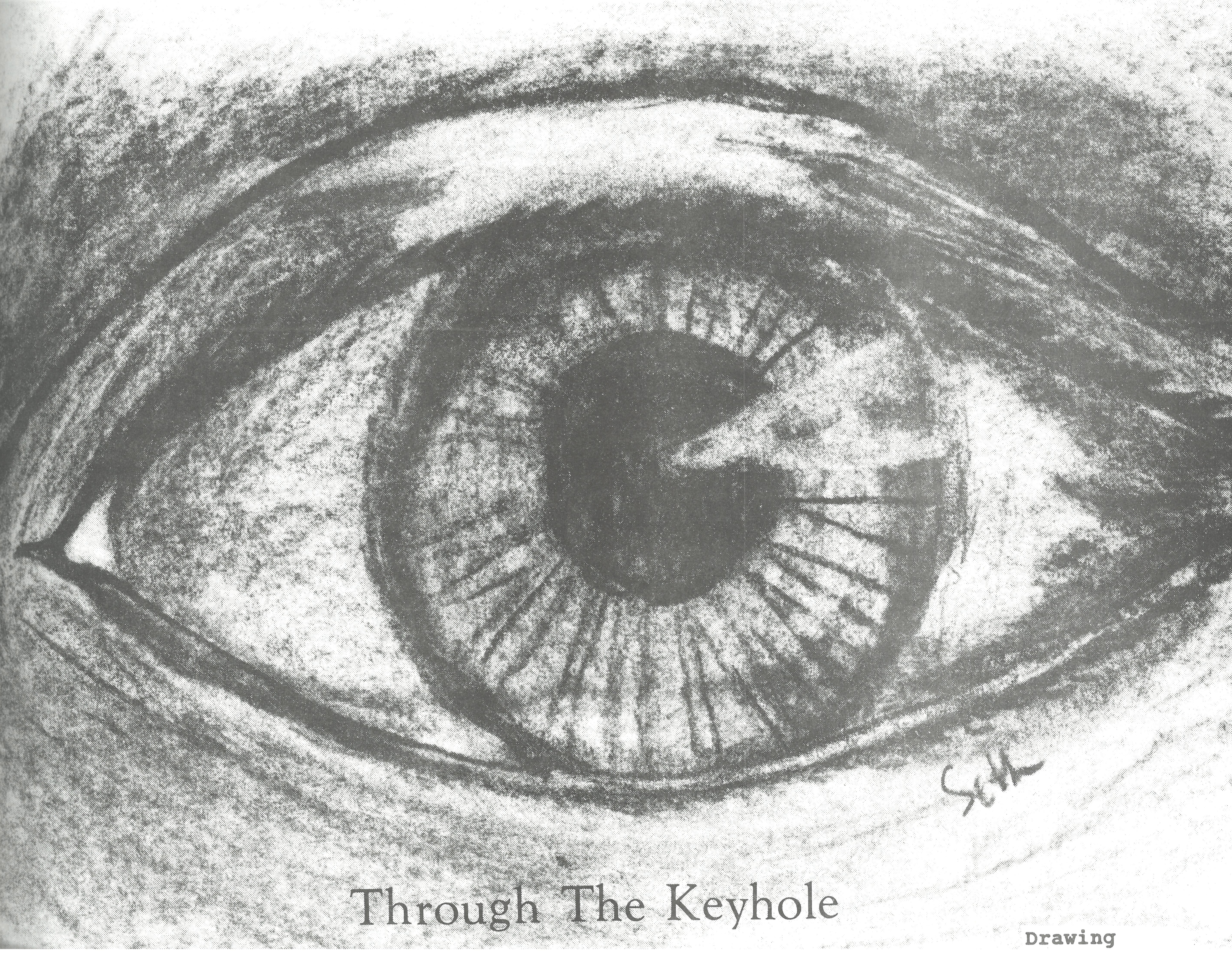
Eye, 1990, Seth P. '91, Grade 8
Over time, the Anthology’s production process itself has evolved alongside the school’s teaching and technology. Former art teacher Andrea Sparks worked on Anthology from 2001 to 2017 and recalls how this period reframed what Anthology represented: less a selective showcase and more a collective record of learning. “It became a time capsule,” she says, “a progression of learning that’s magical.”
Even the logistics of production changed dramatically with technology. What once involved ladders, cameras, and physical paste-ups eventually moved to digital platforms. “When we switched from paper to computer, we were in a tech class learning pre-Adobe,” Andrea says. “It was a labor of love, literally.” Despite the changes, she adds, what has remained constant is the sense of shared purpose among faculty who have worked on it over decades. “The kind of bonds you make over those years—it stays with you.”
Older editions featured small, black-and-white images on copier paper. The current Anthology is full-color and glossy, with larger reproductions and a higher page count—changes that required budget advocacy and administrative buy-in. Cover selection is a collaborative process involving Nancy, Lauren, and the school’s Communications team, with an eye toward representing different age levels and artistic techniques across a series of issues.
The expansion of the Electives Program also reshaped what appears in the publication. When all students took art as a core class, submissions naturally clustered around shared assignments. Now, students who specialize in ceramics, woodworking, or other disciplines bring work that reflects genuine passion and depth. “Kids are doing what they love to do,” Nancy says. “Getting kids who can dig into what they are most passionate about” has changed the character of their work.
With the introduction of the electives program, not every Upper Division student chooses to specialize in visual arts, devoting their time instead to music and/or drama. As a result, the number of Upper Division students represented with art has decreased, while the number of pieces by a single artist may increase.
Anthology has never been able to include every student’s work, but its editors think carefully about who has and hasn’t had the chance to appear. Nancy and Lauren maintain a tracking system that logs whose work has been featured in previous years, with eighth graders who haven’t yet appeared treated as a priority. “Every single person is producing the work that could go into Anthology,” Lauren says. “The expectation isn’t set for one type of assignment or one type of strength. Everyone can feel that kind of pride and excitement to have work included at some point.” The publication also works to place different kinds of achievement on equal footing—a Scholastic award winner might appear on the same page as a piece done for a classroom assignment. Excellence in all areas is equally important.
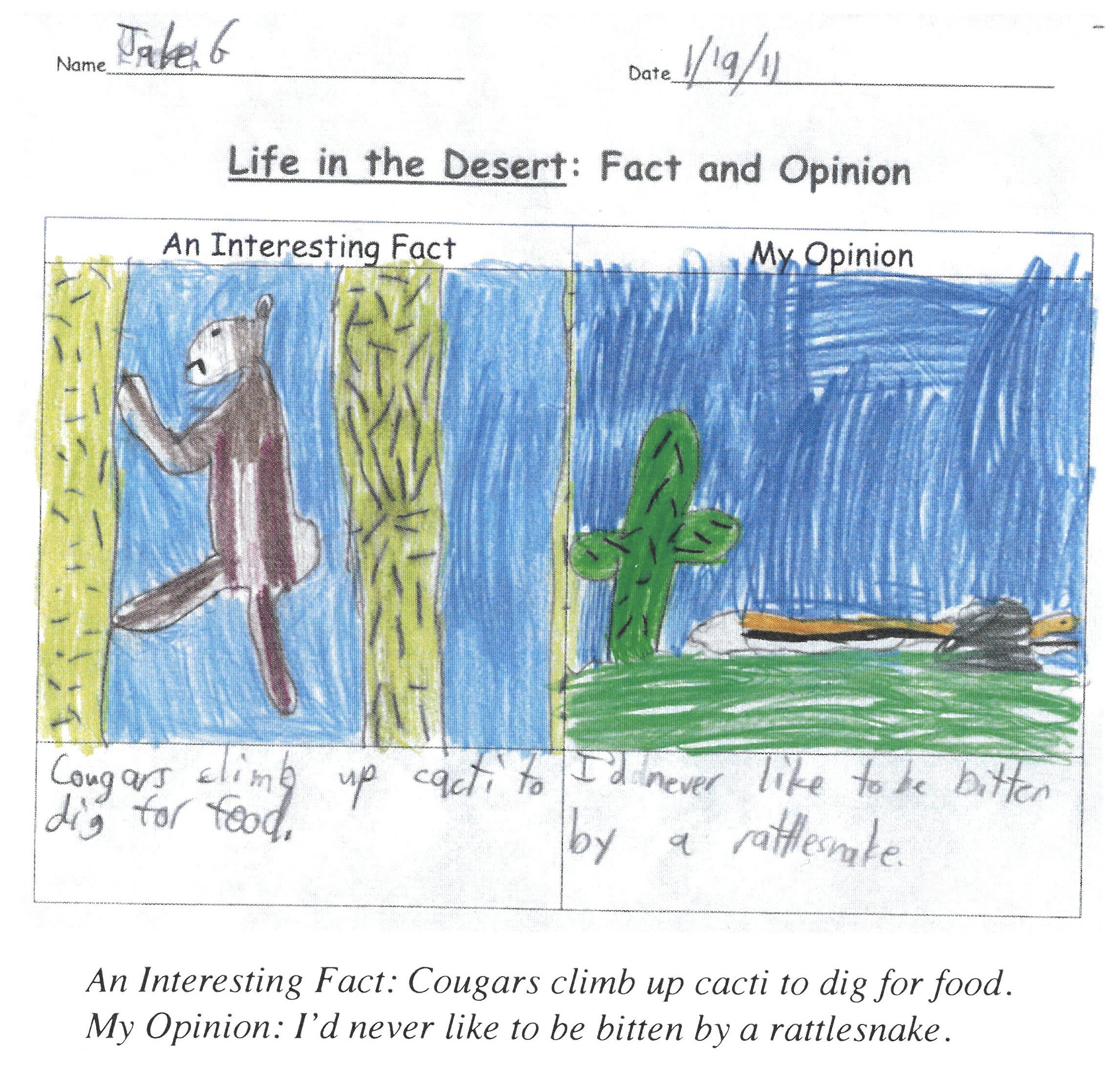
Life in the Desert: Fact and Opinion, 2011, Jake G. '17, Grade 3
Each year’s edition opens with a dedication to a faculty or staff member whose work connects to the spirit of the publication. Recent honorees have included librarians who create space for student exploration and a curriculum specialist who helped teachers build the kinds of assignments that make their way into Anthology in the first place. Lauren writes the dedications and gathers student voices about the honoree. The dedication is revealed at a Morning Meeting in the fall—often a surprise to the recipient.
The goal is to signal that different kinds of excellence are worth celebrating, and that the intellectual work happening across the school—not just in English classrooms—deserves recognition.
— LAUREN DENNIS, ENGLISH TEACHER AND DEPARTMENT HEAD
Both editors are already thinking about what Anthology could become. The school’s creative output increasingly extends beyond what can be captured on a printed page: podcasts, animated graphs, green screen video projects, cookbooks. “Every year, I hear about really cool assignments that exist beyond what we could take a picture of,” Lauren says. A future Anthology might include digital components that allow readers to hear student voices or watch student work in motion.
A recent change to the editorial timeline opens new possibilities on that front as well—previously, the publication had to be completed by March, cutting off anything made in the second half of the year. The new schedule extends collection through the end of the school year, capturing spring electives and late-semester work that was previously left out.
For now, the printed edition remains the anchor—mailed to current families and prior eighth-grade graduates, with a version available online for the broader community. It is, Nancy says, the kind of document a student can hold onto. A record that something they made was recognized. “The kids consider it to be an honor,” she says. “It’s like the varsity—for art and writing.”
The Park School’s Anthology celebrates its 60th anniversary with the 2025–2026 edition.
By Emma Hobart-Sheran, Assistant Director of Marketing & Communications
#TheParkSchoolMA #ParkSchoolExcellence #ItAllStartsatPark #ParkSchoolCommunity


_11zon.jpg&command_2=resize&height_2=85 "Small Ideas that Build Something Special")